Dan Brown’s “The Lost Symbol:” A peek into D.C.’s darkest secrets
Reviewed by Adam Hillaire
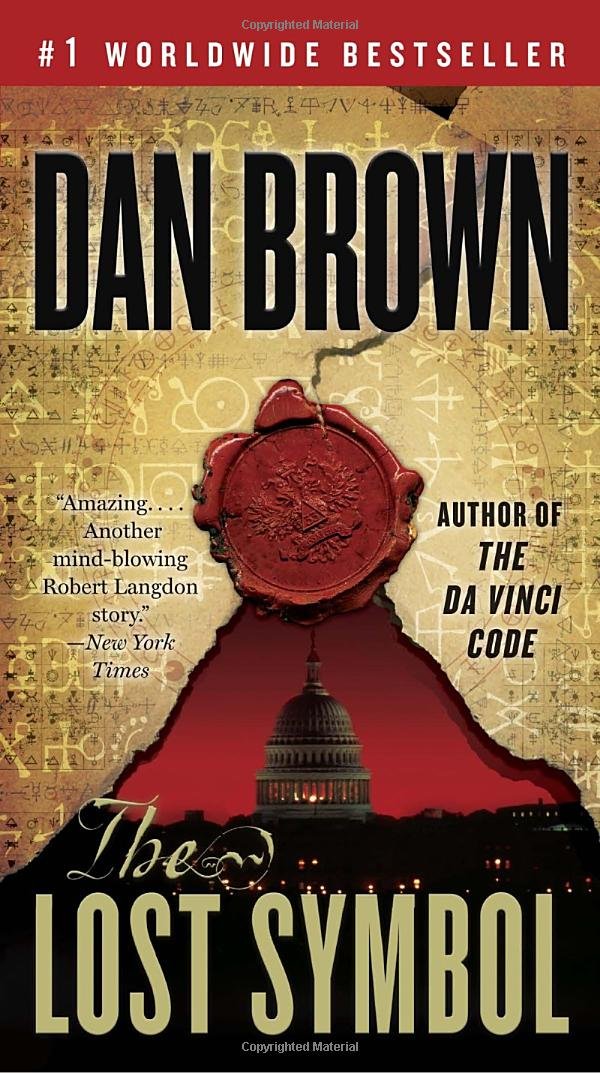
Dan Brown captivates audiences once again with another installment of the adventures of Robert Langdon, The Lost Symbol. The novel takes a closer look into the mysticism surrounding the previously unheard of Masonic Brotherhood, a cult that has knowledge of a multitude of ancient secrets, and has existed for generations. As this is a sequel to the books “The Da-Vinci Code” and “Angels & Demons”, both of which have been criticized for criticizing religion, it has been criticized for being a criticism on religion.
The Lost Symbol is a splendid read for those with an affinity for adventure. It takes place in current-day Washington DC, It starts off with a call from one of Robert Langdon’s rich friends’ assistant who calls him across the country, insisting that he present a speech for an event. Upon Langdon’s arrival, he discovers that the “assistant” who called him over has actually taken his friend hostage and intends to kill him if Langdon refuses to carry out his wishes. Without giving away too many spoilers, I can only say that the plot only thickens from there. The fast-paced chapters keep readers on the edge of their seats. The short chapter design creates many cliffhangers between chapters, which follow 2 plotlines following the adventures Robert, being the main plotline, and the CIA, the subplot, alternately. at one point at the end of a chapter, the narrator describes “If Langdon had not yet grasped his role here tonight, soon he would” (Brown 49). The mysteries and puzzles take up the better part of the book, and slow down the pace a bit, but is still fairly engaging to read. It should also be noted that Brown makes the puzzles in this book very easy to wrap one’s head around, which is nice, because most of the mysteries in this book require a fair bit of research to understand fully. These slower sections also give the reader a chance to get to know what’s going on in the minds of those around langdon. Overall, the pacing is done fantastically, and is probably the best part about the book.
The only bad thing that can be said about The Lost Symbol is that Dan Brown does a terrible job at characterizing his characters and expressing emotions. Everyone in this book is completely two dimensional, Langdon is a Professor from Harvard who knows a lot of stuff regarding symbolism, and the antagonist (Mal’akh) has only 1 goal, and little to no characterization. After the presentation of a very unsatisfying backstory, Mal’akh is given a summarizing description: “His body, once tanned and perfect, was now marred by scars from that night… scars he had kept hidden beneath the tattooed symbols of his new Identity. I am Mal’akh” (Brown 227). He has a little less than a chapter to describe how he got to where he is in this book, and never shows any form of emotion other than ambition. There was a lot of room for improvement on the love interest portion of this book, the relationship between Langdon and Katherine (the noetic scientist heroine) is next to non-existent. There was so much potential for a relationship in this book, it could have easily been squeezed in during the slow portions of the book.
Overall, this book was pretty sub-par. The pacing and plotline was probably it’s only redeeming factor, while the story itself was pretty disappointing. I will, however, say that it is a pretty decent time-killer, Its 510 pages will keep you entertained for about a day if you like the whole sense of adventure theme in a book.

No comments:
Post a Comment